No. 3 9 min read
Transnistria: A Frozen State on the Banks of the Dniester
Discover Transnistria, the breakaway region between Moldova and Ukraine. Explore its Soviet past, the 1992 war, the Sheriff business empire and its ongoing energy crisis.

Welcome to the beginning of Historias Sin Portada—a project born out of excitement and a genuine desire to write, explore and learn. We hope this first post marks the start of a long-lasting relationship between author and reader. Make yourself at home. And what better way to begin than with Transnistria, a frozen state on the banks of the Dniester River?

There are places that appear on every map but somehow seem not to exist in the world.
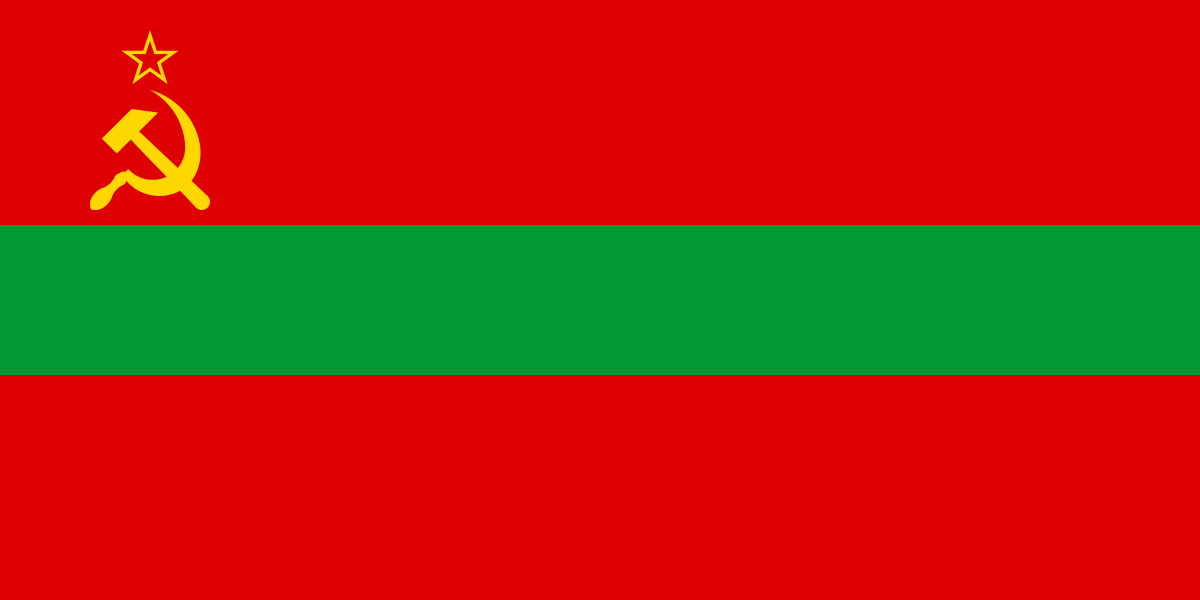
They have a flag, a government, a currency and guarded borders. Their inhabitants live under their own institutions, and their capital still displays symbols from an empire that disappeared decades ago.
As a little extra, they even have a football club that left the Santiago Bernabéu stunned one night in 2021.
And yet, almost no country recognizes that this state actually exists.
Between Moldova and Ukraine, along the banks of the Dniester River, there is a territory that seems to have become trapped in another era: Transnistria.
A wound left open by the collapse of the Soviet Union. A conflict that faded from the headlines without ever being resolved. And a question that still has no straightforward answer: what happens when the world refuses to recognize your country?
Today, we’re exploring this contradiction.
Welcome to Historias Sin Portada.
What Is Transnistria?
Transnistria, whose official name is the Pridnestrovian Moldavian Republic—one we strongly advise against trying to pronounce too often—is a strip of land covering roughly 4,000 square kilometres, squeezed between the Dniester River and the Ukrainian border.
It broke away from Moldova between 1990 and 1992 and has operated ever since as a de facto state, with its own government, currency and army, but without recognition from any United Nations member state. Moldova considers it part of its territory.
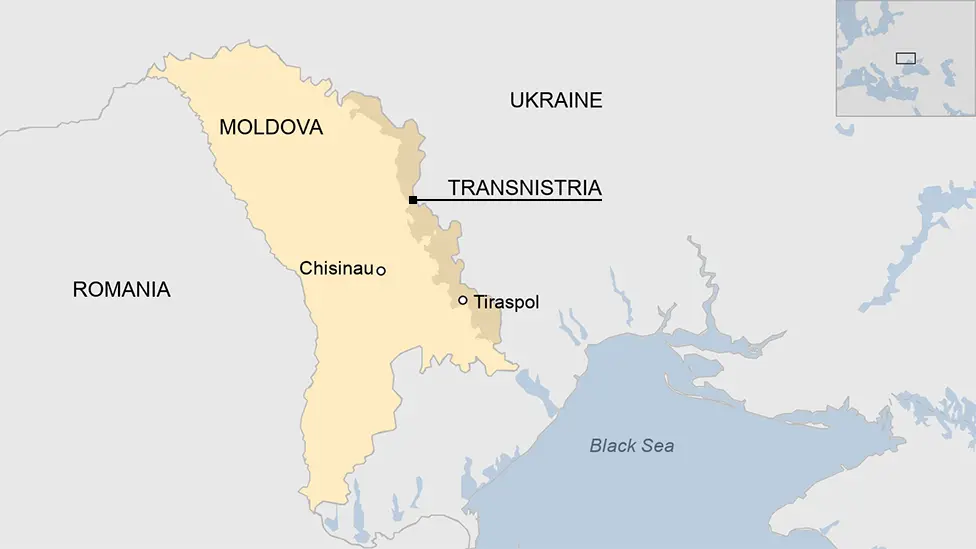
According to official figures, its population is around half a million, although estimates vary depending on the source. Many analysts believe the actual number is lower because of emigration. The BBC’s Transnistria profile provides a useful overview of the region’s geography, political status and history.
How Transnistria Was Born: A Language Law and a Crumbling Empire
It was 1991—coincidentally, the same year I made my entrance into the world—and Moldova was still a Soviet republic like any other. But within its borders, two very different outlooks were beginning to clash.
To the west, a Romanian-speaking population was starting to dream of independence and, for some, reunification with Romania. East of the Dniester, an industrial strip with a largely Russian and Ukrainian-speaking population had spent generations looking towards Moscow rather than Bucharest.
In 1989, Moldova’s parliament passed a law making Romanian the official language and restoring the Latin alphabet, moving away from the Cyrillic script used during the Soviet era. The law was passed on 31 August 1989, and protests on the eastern bank of the Dniester began that same autumn.
For people in the west, it was a reaffirmation of their identity. For those in the east, it was a warning that they were about to be left behind.
Things, unsurprisingly, got messy.
On 2 September 1990, while the Soviet Union was still standing, the eastern strip proclaimed its own republic, with Igor Smirnov at the head of its council. When Moldova declared independence a year later, on 27 August 1991, the region had already spent twelve months considering itself a separate country.
In December 1991, a referendum was held in which, according to the official results, an overwhelming majority voted for independence. Nobody in the world recognized the result. Nevertheless, as far as the region’s separatist authorities were concerned, there was no turning back.
The 1992 Transnistria War: The Conflict the World Barely Noticed
What came next was brief. But it certainly wasn't peaceful.
The first clashes broke out in November 1990 in the town of Dubăsari. But it was in the spring of 1992 that the conflict truly erupted, with Moldovan forces fighting Transnistrian militias increasingly backed by the 14th Army, the Soviet—and later Russian—force that remained stationed in the region.
The conflict reached its peak in June 1992 in the city of Bender. For three days, from 19 to 21 June, the city became an urban battlefield. It was one of the bloodiest episodes of the entire war. A few days later, General Alexander Lebed took command of the 14th Army, whose artillery ultimately tipped the balance.
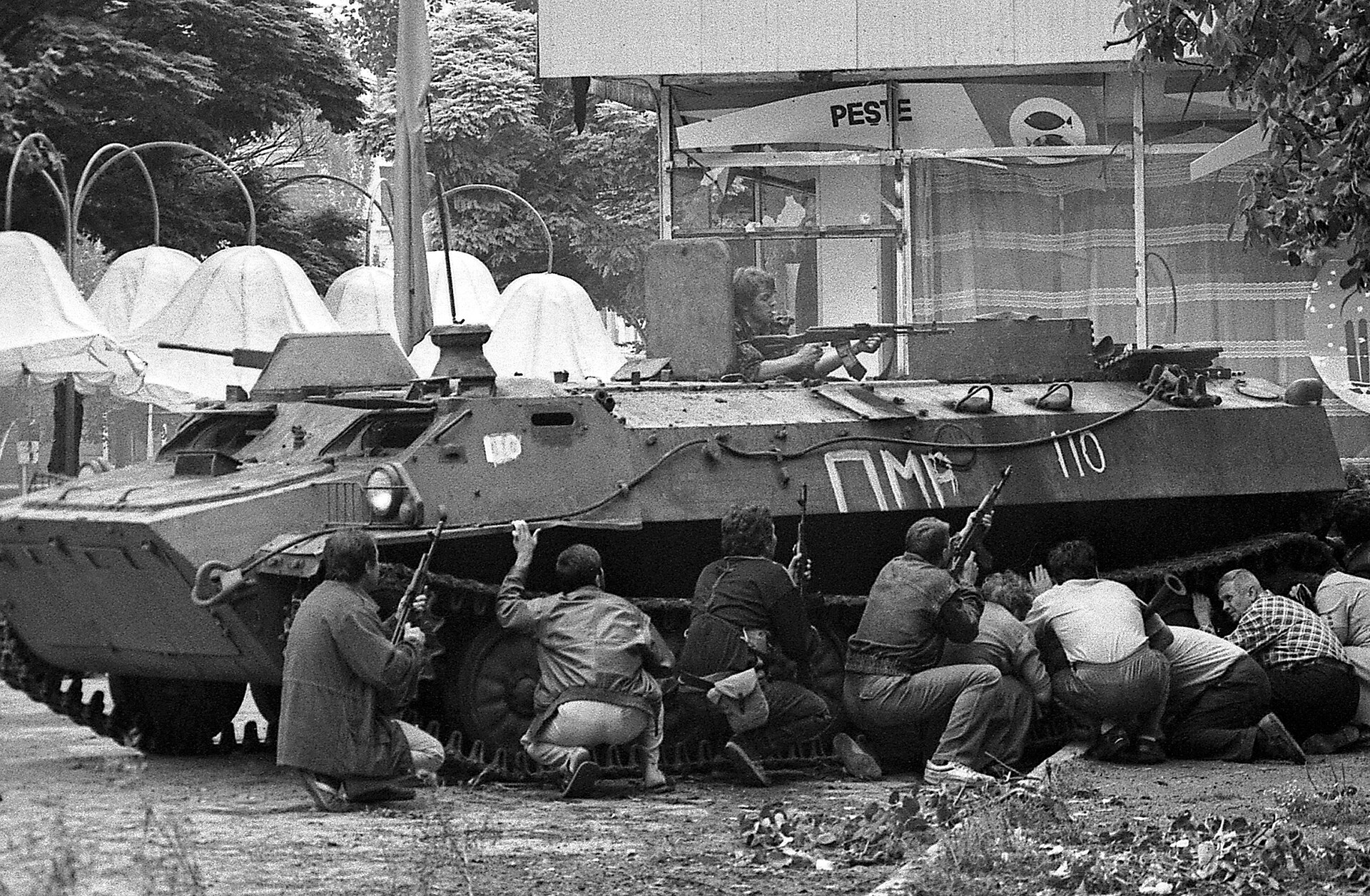
When the dust settled, the figures made grim reading. More than 200 Moldovan combatants died in Bender alone, while the overall death toll from the war ran into the hundreds, with figures varying considerably depending on the source.
In July 1992, a ceasefire was signed in Moscow by Boris Yeltsin and Mircea Snegur. Shortly afterwards, a peacekeeping force including Russian troops was deployed in the region.
That ceasefire is still in place. And Russian troops never left.
What Transnistria Looks Like Today: Lenin, Plastic Coins and Multiple Passports
Crossing into Transnistria is often described by visitors as stepping into a time capsule that the rest of the world left behind in 1991.
In Tiraspol, the capital, a statue of Lenin still stands in front of a government building. The flag retains the hammer and sickle, a symbol that no state flags still display today—even if it can still be found in the insignia of certain Russian subdivisions.
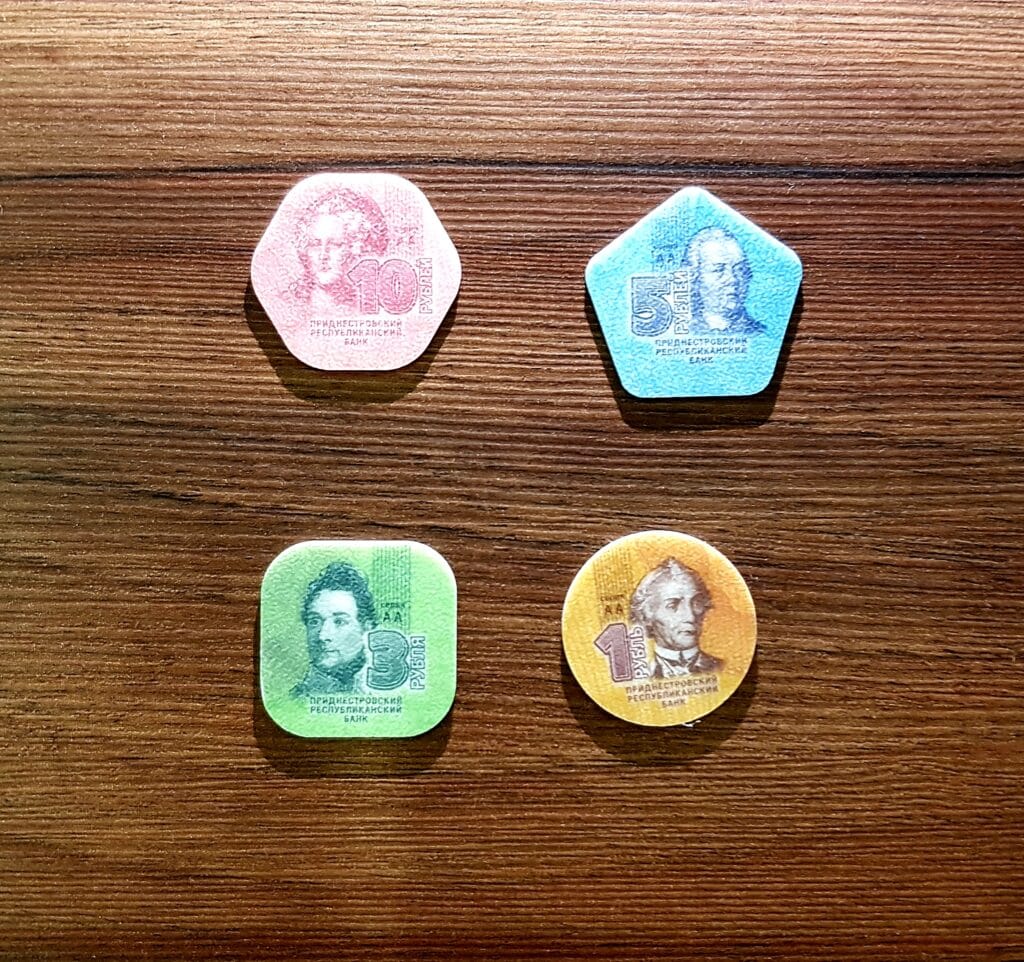
Its currency, the Transnistrian ruble, has even featured plastic coins, which is not something you come across every day.
And because Transnistrian passports are not internationally recognized, many residents keep one, two or even three other passports—Moldovan, Russian or Ukrainian—in a drawer simply to travel outside a country that officially isn't a country.
But the most interesting thing about Transnistria is not what it has preserved from the past. It is who controls the present.
Sheriff: The Company That Dominates a Country—and Beat Real Madrid
In 1993, two men with little-known backgrounds, Viktor Gushan and Ilya Kazmaly, founded Sheriff, a business that would eventually become one of Transnistria’s most powerful economic conglomerates.
According to Radio Free Europe/Radio Liberty, the pair reached an agreement with Igor Smirnov, the region’s first de facto leader, which allowed them to acquire state-owned supermarkets.
But the origins of their fortune remain controversial. The same investigation reported allegations linking Sheriff’s rise to the illegal trade in tobacco, alcohol and food.
Other analyses document the tax and customs privileges the group enjoyed during part of its expansion, although some of those advantages were later withdrawn. The OSW Centre for Eastern Studies has examined these privileges and Sheriff’s role in Transnistria’s economy.
In 1997, Gushan and Kazmaly also took over a local football team, Tiras Tiraspol, and renamed it FC Sheriff. And that name might ring a bell because of something that happened a few years ago.
On 28 September 2021, the club pulled off one of the biggest surprises in recent Champions League history. Sheriff Tiraspol defeated Real Madrid 1-2 at the Santiago Bernabéu, thanks to a late goal from Sébastien Thill.
As an extra twist, Real Madrid would go on to win that season’s Champions League against Liverpool. Perhaps that defeat gave them the motivation they needed to go all the way, right?

But when you stop to think about it, the result seems almost unreal. Real Madrid, then a thirteen-time European champion, had been beaten by a team from Tiraspol, a city in a breakaway region that the international community recognizes as part of Moldova.
Cobasna: The Powder Keg Russia Has No Intention of Giving Up
Back to the conflict itself. Transnistria also hides what is often described as one of Europe’s largest ammunition stockpiles.
Near the village of Cobasna, close to the Ukrainian border, there is a Soviet-era ammunition depot said to contain around 20,000 tonnes of weapons and ammunition. It is guarded by a Russian contingent of roughly 1,500 soldiers, according to commonly cited estimates.
Access for international observers has been restricted, meaning that the precise figures are difficult to verify independently.
Then, in April 2022, barely two months after Russia launched its full-scale invasion of Ukraine, Transnistria experienced several incidents that raised alarm.
On 25 April, the headquarters of the region’s State Security Ministry in Tiraspol was attacked with grenade launchers. The following day, two explosions damaged the antennas of a powerful radio station that rebroadcast Russian programming. Shortly afterwards, gunfire and drones were reported near Cobasna, the most sensitive site of all.
Radio Free Europe/Radio Liberty reported on the attack in Tiraspol and on the subsequent explosions at radio transmitters.
What made the incidents particularly strange was that nobody claimed responsibility. Transnistria blamed Ukraine. Moldovan President Maia Sandu suggested that the events could have been the work of factions inside the region seeking to destabilize the situation.
Officially, however, responsibility for the attacks has never been conclusively established.
The Gas Crisis: When Transnistria Lost Its Heating
On 1 January 2025, another blow arrived—this time, a quieter one.
Ukraine stopped allowing Russian gas to transit to Europe when its transit agreement expired. Transnistria, which had relied for years on Russian gas supplied without direct payment by the region, suddenly found itself without those deliveries in the middle of winter.
Reports at the time described around 75,000 private homes without gas, nearly 1,500 apartment blocks without heating or hot water, and most industrial activity brought to a halt.
The English-language Moldovan news agency IPN reported on the scale of the outages.
Moldova offered to help Transnistria purchase gas on European markets, but the authorities in Tiraspol initially rejected the proposal, preferring to wait for Gazprom to resume supplies. The situation changed on 20 January 2025, when the region’s de facto leader, Vadim Krasnoselsky, said he was prepared to receive and pay for gas supplied through Moldovagaz.
An English-language report on the proposed arrangement covered the change in position.
A week later, on 27 January, the European Commission announced a €30 million emergency assistance package to address the energy crisis. It was intended to help fund gas purchases for Transnistria and electricity production, while also supporting electricity supplies to the part of Moldova controlled by the government.
But the story is far from over.
According to an article published by Mezha in August 2026, the current supply arrangement relies on a complicated mechanism: gas is purchased on the European market, Hungary’s MET Gas and Energy Marketing AG delivers it to the Moldovan border, and Moldovagaz transports it through to Transnistria.
Payment is made by a company registered in Dubai, using funds from a Russian special-purpose loan. It all sounds a little… unusual.
Meanwhile, Moldova is preparing a contingency plan for the 2026–2027 heating season in case gas supplies are interrupted again. Better to plan ahead than to find yourself back in the same situation, right?
Finally, Why Isn’t Transnistria Recognized?
Here lies the paradox that makes Transnistria one of the most fascinating stories on Historias Sin Portada.
As we mentioned at the beginning, Transnistria has a government, guarded borders, a currency and an army. In practice, it has many of the features we would normally associate with a state.
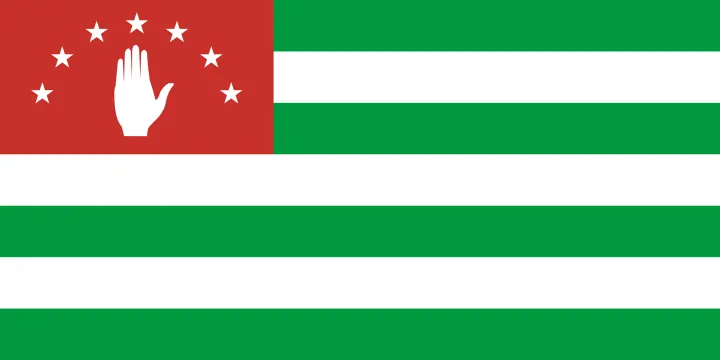
Legally, however, its independence remains unrecognized. No United Nations member state recognizes it, and not even Russia, its most important backer, has formally recognized its independence. Its limited recognition comes from other unrecognized or partially recognized territories, including Abkhazia and South Ossetia, which we will explore in future articles.
Transnistria is not a country in the process of being born. It is a country that the world decided, more than three decades ago, to leave on pause.
The winter of 2025 literally froze a territory that had already spent thirty years frozen in time. The war in neighbouring Ukraine has once again drawn attention to this strip of land that many people had all but forgotten.
What happens along this border in the coming years could finally bring Transnistria out of limbo. Or it could leave it exactly where it is: between two worlds, waiting for news that never arrives.
Thanks for reading the very first article on Historias Sin Portada.