No. 3 7 min read
World Nomad Games: The Olympics You Won’t See on TV
Discover the World Nomad Games: horseback competitions, kok-boru, traditional wrestling and the nomadic cultures keeping ancient traditions alive.

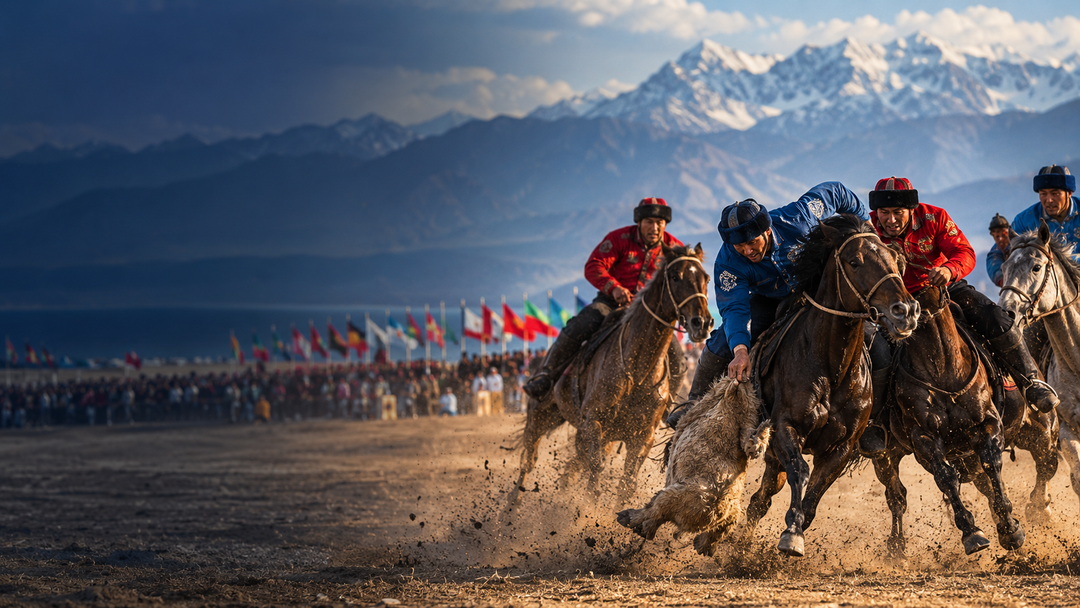
Imagine switching on the TV and watching a sports competition. So far, so normal. Now replace the ball with the body of a slaughtered goat, the footballers with riders galloping at full speed, and the goal with a kind of container on the ground. Add a few shoves, horses charging at full tilt and players leaning out of their saddles to grab the animal. Still with me?
Believe it or not, this really exists. It’s called kok-boru, and it’s one of the biggest attractions at the World Nomad Games, an event you’ve probably never heard of.
Don’t worry, you’re not the only one.
Today, we’re exploring what these games are, where they come from and why they bring together thousands of athletes in the mountains of Central Asia.
Welcome to Historias Sin Portada.
A Rescue Mission Disguised as a Festival
It all began in 2014, on the shores of Lake Issyk-Kul in Kyrgyzstan. The first edition took place in Cholpon-Ata, a resort town that would host the games again in 2016 and 2018.
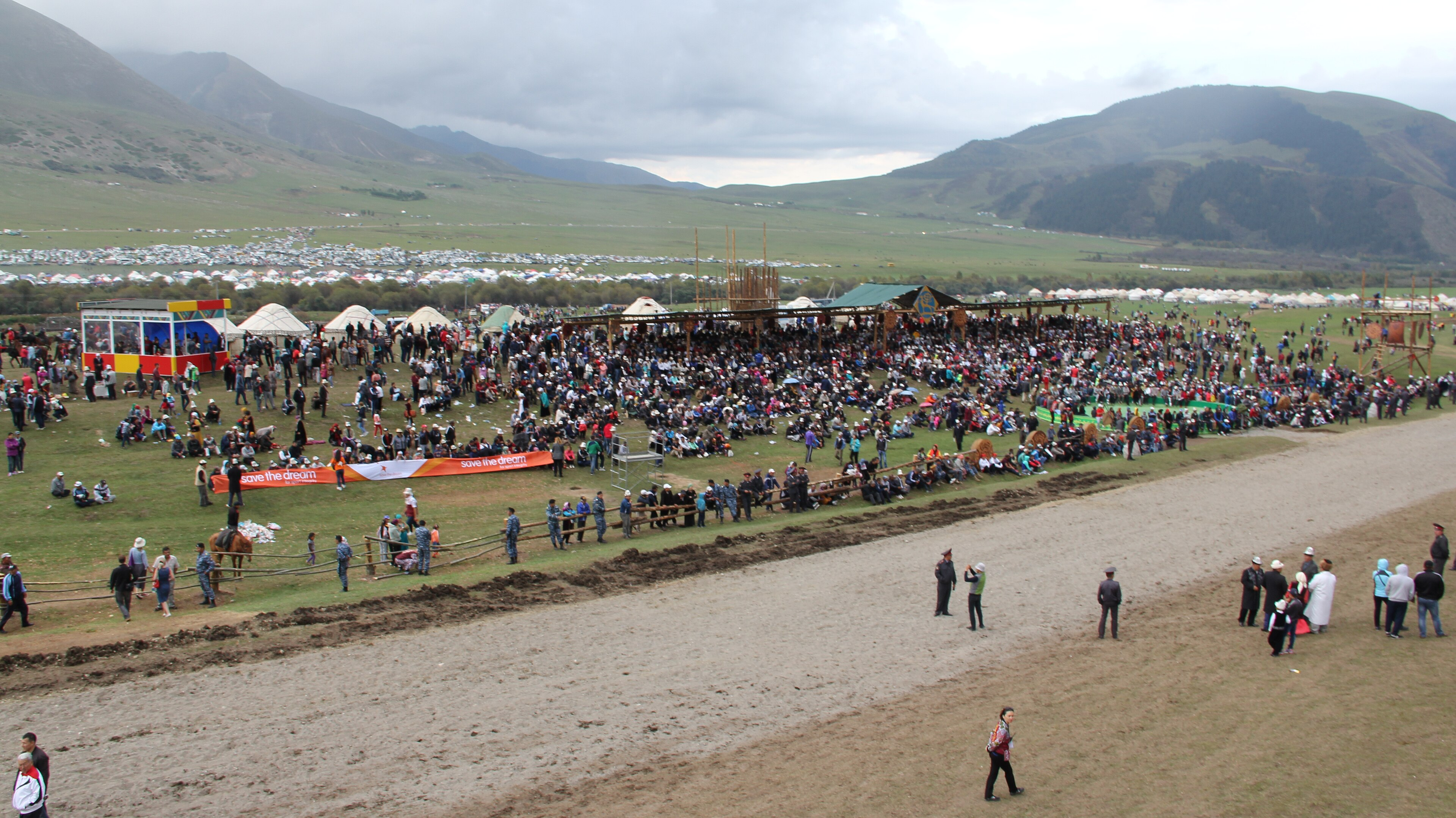
The idea behind the event was almost a rescue mission: to recover and celebrate the traditional sports and games of nomadic peoples, many of which were at risk of disappearing as knowledge was lost and younger generations grew less interested in practising them.
Put simply, the aim was to stop certain traditions from gathering dust in the attic of history.
And the project gained international recognition. In 2021, UNESCO added the programme Nomad Games: Rediscovering Heritage, Celebrating Diversity to its Register of Good Safeguarding Practices for Intangible Cultural Heritage.
Here’s an important detail, though: UNESCO recognized the cultural safeguarding programme, not the Games as an official Olympic competition.
That’s right: the World Nomad Games have nothing to do with the International Olympic Committee. Calling them the “Nomadic Olympics” is our own catchy little shortcut, but a shortcut nonetheless.
The plan was to hold the event every two years, although the pandemic forced the postponement of the edition scheduled for 2020 until 2022. That year, the Games travelled outside Kyrgyzstan for the first time, taking place in İznik, Türkiye.
In 2024, they moved to Astana, Kazakhstan, before returning to their birthplace in 2026.
But what actually happens when the competitions begin?
The Most Surprising Sports You Won’t Find in the Olympics
Forget football, basketball and pretty much any sport you regularly see at major international championships. Here, traditional games, equestrian events and competitions passed down through generations all come together.
The star of the show is kok-boru. Two teams of riders battle to grab the body of a slaughtered goat—or a regulation dummy, depending on the rules—and carry it to a scoring area called the tai kazan.
Yes, you read that right. 🫥
This isn’t some bizarre activity invented for tourists. It’s a sport with its own rules and a long-standing tradition in Kyrgyzstan. You can check how it works in the official kok-boru rules published by the Kyrgyz Republic’s Kok Boru Federation.
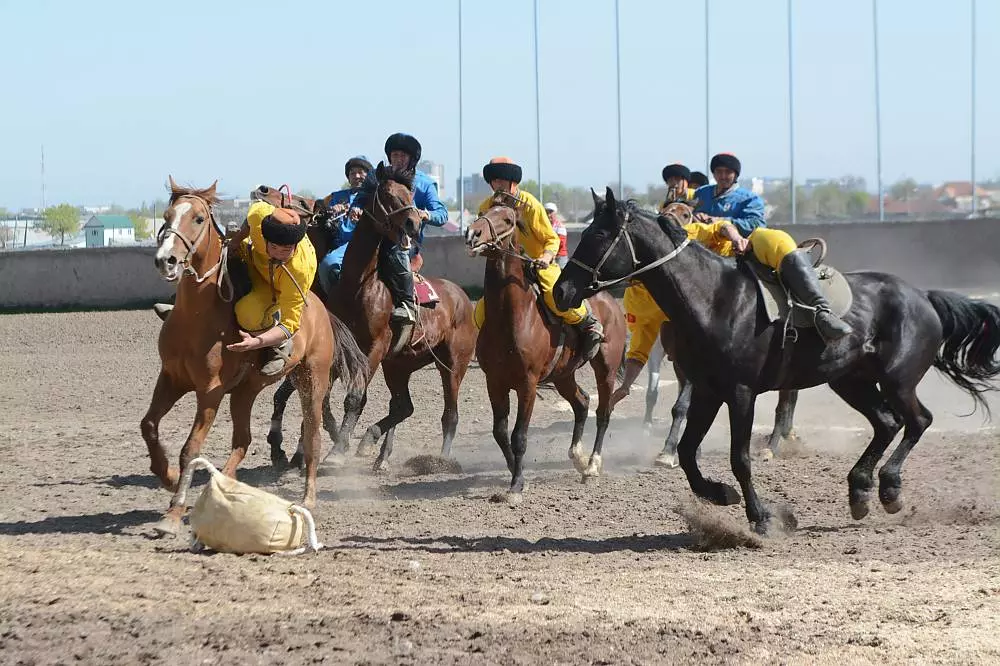
But there’s more. In enish, riders wrestle one another without dismounting. In cirit, a traditional Turkish discipline, competitors throw blunt javelins while riding at speed. There’s also mounted archery, horse racing and traditional wrestling.
Some horse races can cover distances of up to 25 kilometres. Twenty-five. We’re not talking about taking the dog around the block here.
Then there’s one of the most bewildering events of all: bone-breaking.
Euronews reported that, at the 2026 Games, the Mongolian champion successfully defended his title by breaking 58 animal vertebrae in one minute. Fifty-eight. In sixty seconds. No, nobody is breaking their own bones. And no, the animals aren’t alive when this happens.
And it’s not all about muscle. There are also games of strategy and intelligence, such as oware, a traditional African board game particularly associated with Ghana.
From a Local Festival to a Global Event
So, who gets to take part in the World Nomad Games?
Initially, the event was especially associated with countries and communities with nomadic traditions. Over time, however, it opened up to athletes from more places and developed into a genuinely international competition.
The growth has been considerable. Around forty countries took part in 2016, and later editions continued to expand. The Games travelled to Türkiye in 2022 and Kazakhstan in 2024.
But the real leap came in 2026.
The sixth edition took place from 31 August to 6 September, with events in Bishkek and the Issyk-Kul region. According to Euronews, more than 3,000 athletes representing 109 national teams competed across 42 disciplines. The official organizers, meanwhile, presented a programme of 43 sports.
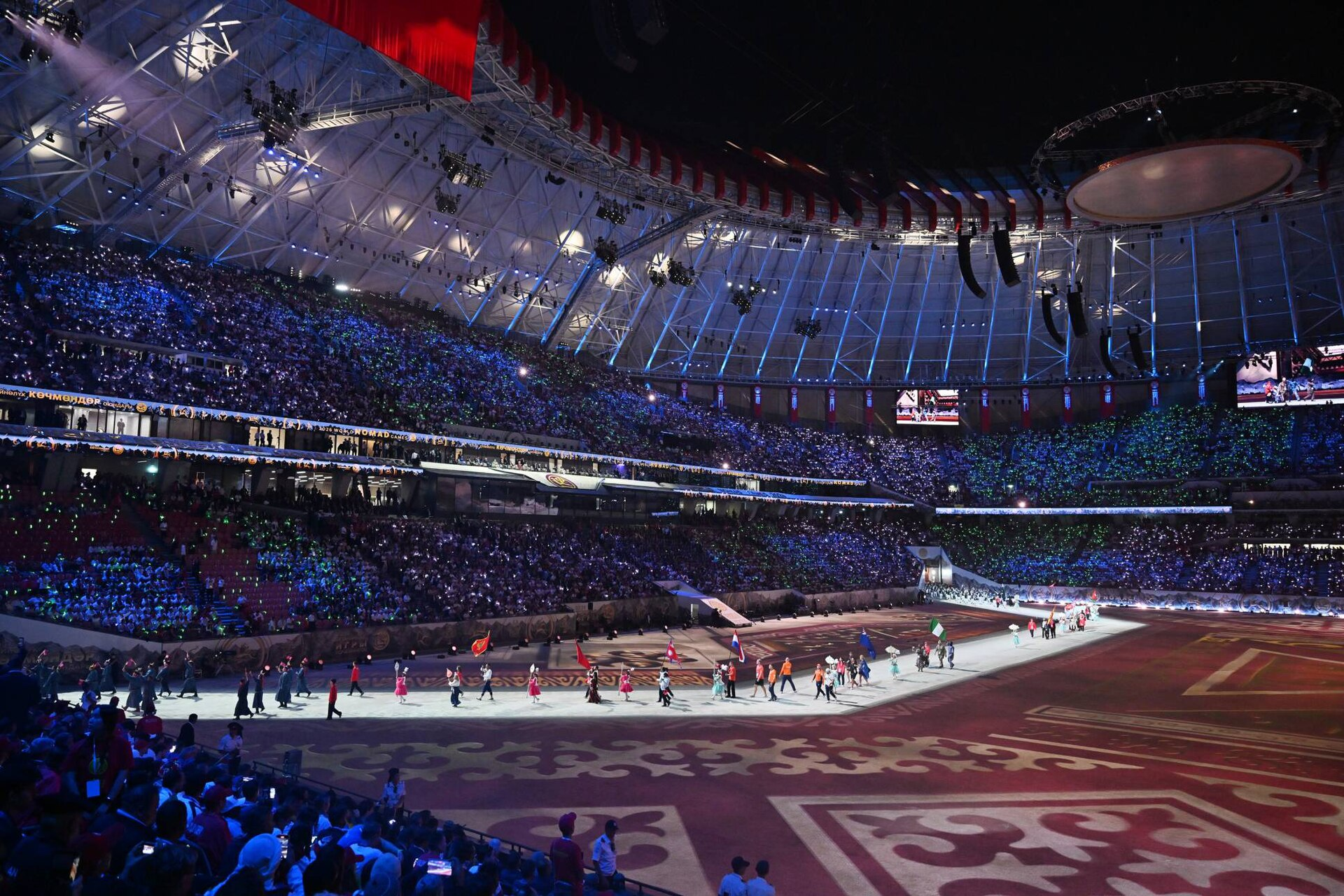
And the event wasn’t limited to the sports themselves. In Kyrchyn Gorge, an ethnocultural village was set up to showcase traditional nomadic life, including crafts, music, food, clothing and, of course, yurts.
Here’s a detail that might make you think. According to Euronews, a traditional yurt can be assembled in approximately half an hour. Half an hour to have a home. Think about that the next time you look at rental prices.
The opening ceremony also had a diplomatic dimension. It coincided with the 35th anniversary of Kyrgyzstan’s independence and a summit of the Shanghai Cooperation Organisation. More than twenty heads of state and government attended, including Vladimir Putin.
In total, more than 200,000 people visited the Games, according to Euronews’ coverage, produced in partnership with Kyrgyzstan’s Ministry of Culture.
And even the medal table caused a little controversy.
Different tallies were published about which country had won the most medals and golds. Kyrgyzstan’s sports authorities pointed out that the Games do not maintain an official overall country ranking: their purpose is to preserve traditional sports and strengthen cultural ties, not to crown one nation above all the others.
You can read more about the disagreement in this Qazinform report on the unofficial medal standings.
Ironically, an event dedicated to centuries-old traditions ended up generating a very modern debate about how medals should be counted.
Culture or a Political Showcase?
And here comes the uncomfortable question. Are these Games really about preserving traditions, or are they also a giant showcase for their hosts?
Probably both.
There are families and communities keeping games, crafts and knowledge alive that might otherwise have disappeared. And there are governments that see the event as an opportunity to attract tourists, gain prestige and project a certain image of their country to the world.
When you bring more than twenty political leaders together for an opening ceremony, it’s hard to argue that this is just about sport.
But there’s another issue worth considering: animal welfare.
Kok-boru has faced criticism because a slaughtered goat is used in the competition. Supporters see it as a sporting tradition with deep cultural roots; critics question aspects of the practice. The debate shouldn’t turn into a caricature of the communities that play it, but neither should we shy away from asking uncomfortable questions.
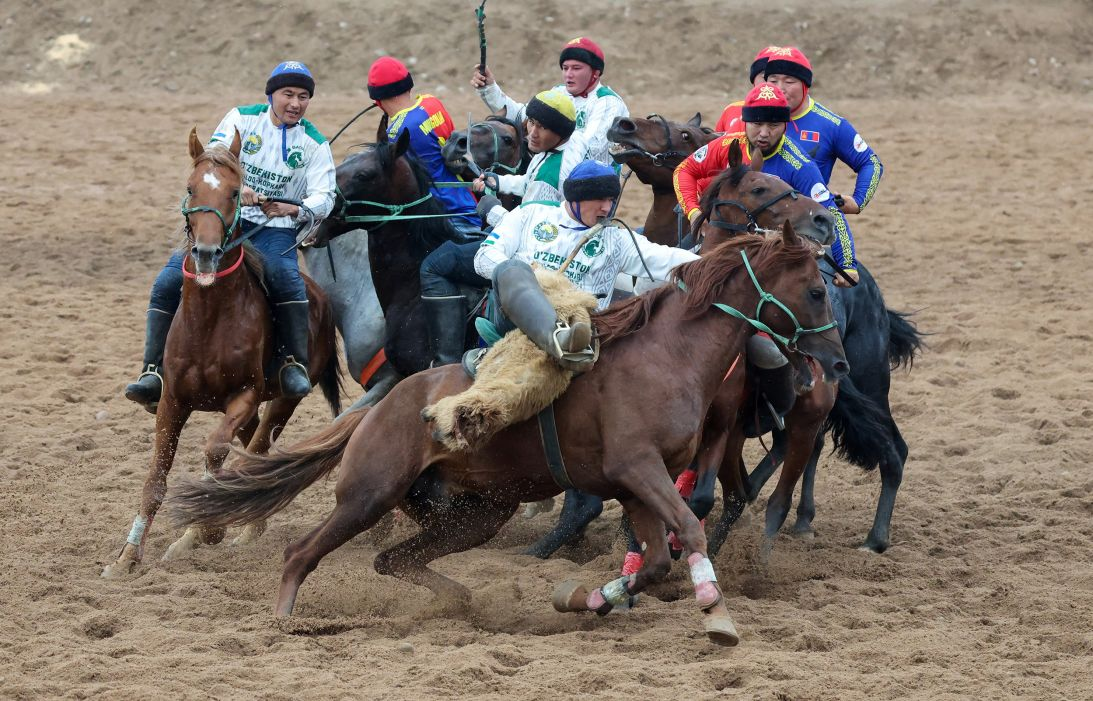
Traditions rarely survive completely unchanged. More often, they endure by adapting, being passed on and finding new audiences. Kok-boru, for example, is no longer played only out on open grassland. It also takes place in arenas with stands, cameras and journalists from around the world.
That exposure can help keep the sport alive, as long as the communities that have preserved it remain central to the way it is practised and presented.
A Tradition That Wants to Stay Alive
The next World Nomad Games are expected to take place in Kazan, Russia, in 2028, although the organizers have yet to announce the definitive dates and programme.
But the true legacy of the Games cannot be measured only in participating countries, medals or spectators.
It lies in knowledge passed from one generation to the next, in games being played again and in people finding reasons to keep their traditions alive.
And perhaps that’s the most interesting part of this story.
We all have a festival, a game or a craft that fewer and fewer people know about. Somewhere in the world, someone is trying to bring it back, sometimes with pride and sometimes against enormous odds.
And sometimes, getting the world to pay attention means putting it under the spotlight.
These are the stories that rarely make the front page: competitions that aren’t Olympic events, featuring horses, board games and a goat as an unlikely star. They remind us that there are many other ways to compete, live together and understand the world.
Thanks for joining us for another story from Historias Sin Portada.